
About these narratives: The following five user journeys are fictionalised composites based on real patterns documented in community research, mental health literature, and advocacy work. They represent the diversity of Black queer men's experiences in the UK and demonstrate how targeted mental health reparations could transform individual lives whilst building community infrastructure.
These narratives intentionally centre Black queer men as full human beings—not statistics, not case studies, but people with histories, relationships, dreams, and the fundamental right to survival and flourishing. Each journey tracks impact across the 5-year delivery period and projects 10-year outcomes, showing both immediate crisis intervention and long-term structural change.
Journey 1: Marcus - "From Crisis to Community Leader"
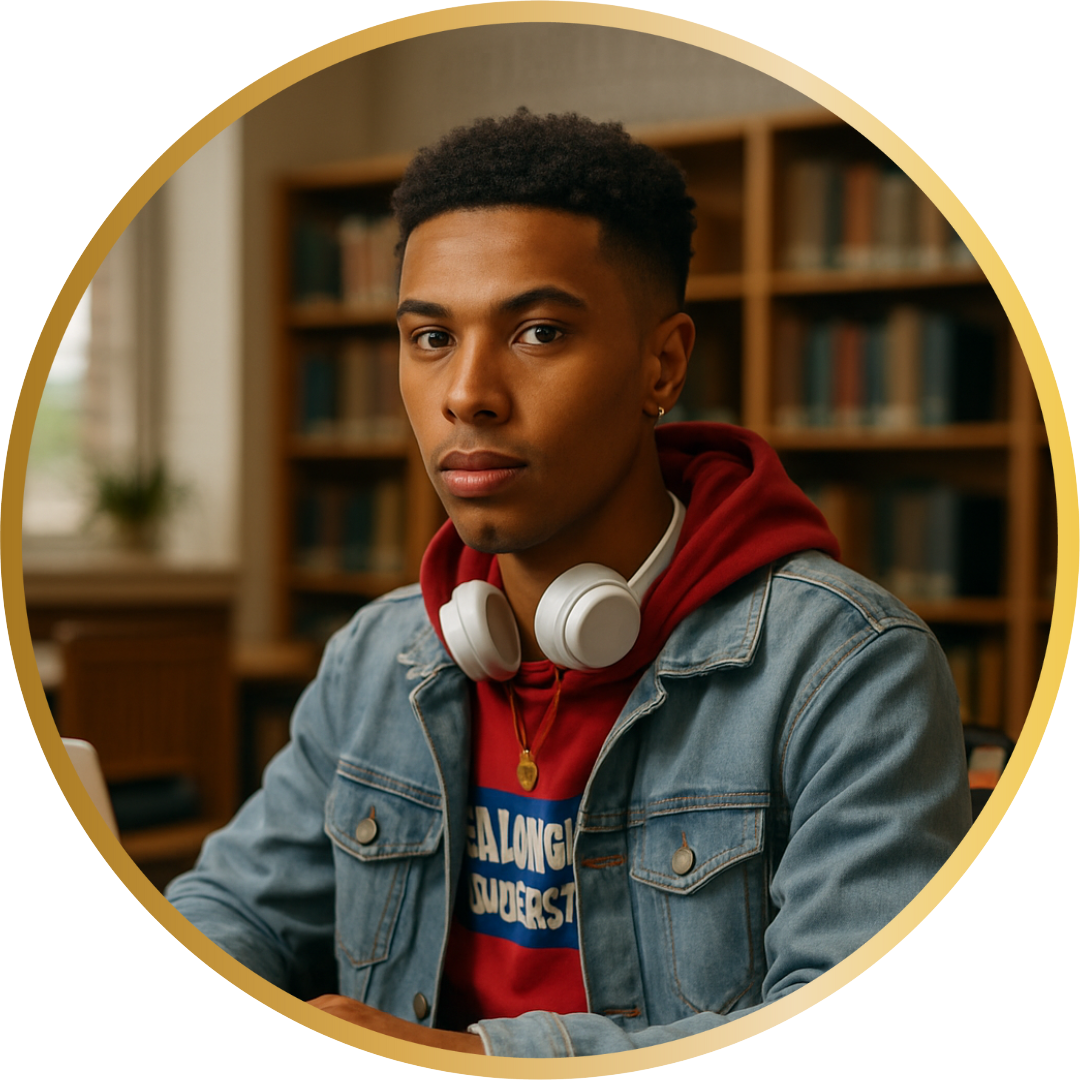
Marcus, 19, Mixed (Black Caribbean/White British)
Year 0: Before the Programme (2025)
Marcus is in second year at Birmingham City University studying Social Work. He came out as gay at 16 but hasn't told his Caribbean grandmother who raised him, fearing rejection from the only family he has left. He attempted suicide twice during A-levels after experiencing racist and homophobic bullying. His university counselling service has a 12-week waiting list and when he finally got an appointment, the white counsellor asked him to explain what "intersectionality" meant.
He finds community online and occasionally at Hurst Street gay bars, but feels disconnected from the predominantly white scene. He's started self-harming again and his flatmates have noticed. He's close to dropping out of university.
Marcus sees a poster about the new Black LGBTQ+ mental health hub opening in Digbeth at his university's Student Union. A peer support worker—a 24-year-old Black queer man named Jordan—does outreach on campus and invites Marcus to a drop-in session. No forms, no diagnosis required, just safe space.
Marcus attends nervously. He meets eight other young Black queer men, including two other students. They talk about family rejection, code-switching, feeling isolated in predominantly white LGBT spaces. For the first time, Marcus doesn't have to explain himself.
Marcus now attends weekly peer support groups and has started seeing Dr. Amara Thompson, a Black queer psychologist embedded in the community hub. Dr. Thompson doesn't pathologise his experiences—she names anti-Black racism and homophobia as the traumas they are. They work on healing strategies rooted in Marcus's own cultural context.
Through the hub, Marcus learns about ballroom culture. He joins House of Ubuntu, a Birmingham voguing house. The chosen family structure gives him what his biological family couldn't: unconditional acceptance. He hasn't self-harmed in eight months.
Marcus completes his Social Work degree and applies for the hub's peer support worker training programme. He's one of fifteen Black queer men selected for the year-long programme combining mental health first aid, trauma-informed practice, and community organising. He receives a living wage stipend whilst training.
He finally tells his grandmother he's gay. She struggles but doesn't reject him. The family therapy service connected to the hub offers culturally specific support for Black Caribbean families navigating LGBTQ+ identity. His grandmother attends three sessions.
Marcus is now a full-time peer support worker at the Birmingham hub, earning a proper salary with NHS Agenda for Change terms. He runs the weekly drop-in for 18-25 year olds and coordinates outreach to universities across the West Midlands. He's supported 47 young Black queer men through their first contact with mental health services.
He's also become a house father in House of Ubuntu, mentoring five younger members. The hub partners with the house to run monthly "Heal Through Movement" sessions combining voguing with group therapy.
10-Year Impact (2035): Marcus has completed an MSc in Community Mental Health and works as a clinical supervisor training other peer support workers across the Midlands. He's published research on ballroom culture as therapeutic community. The model he helped develop in Birmingham has been replicated in five other cities.
He hasn't attempted suicide in nine years. He has a chosen family of twenty people. His grandmother came to his graduation and met his boyfriend. He's alive—and that's not a small thing.
Journey 2: Kwame - "Asylum, Healing, and Building Home"
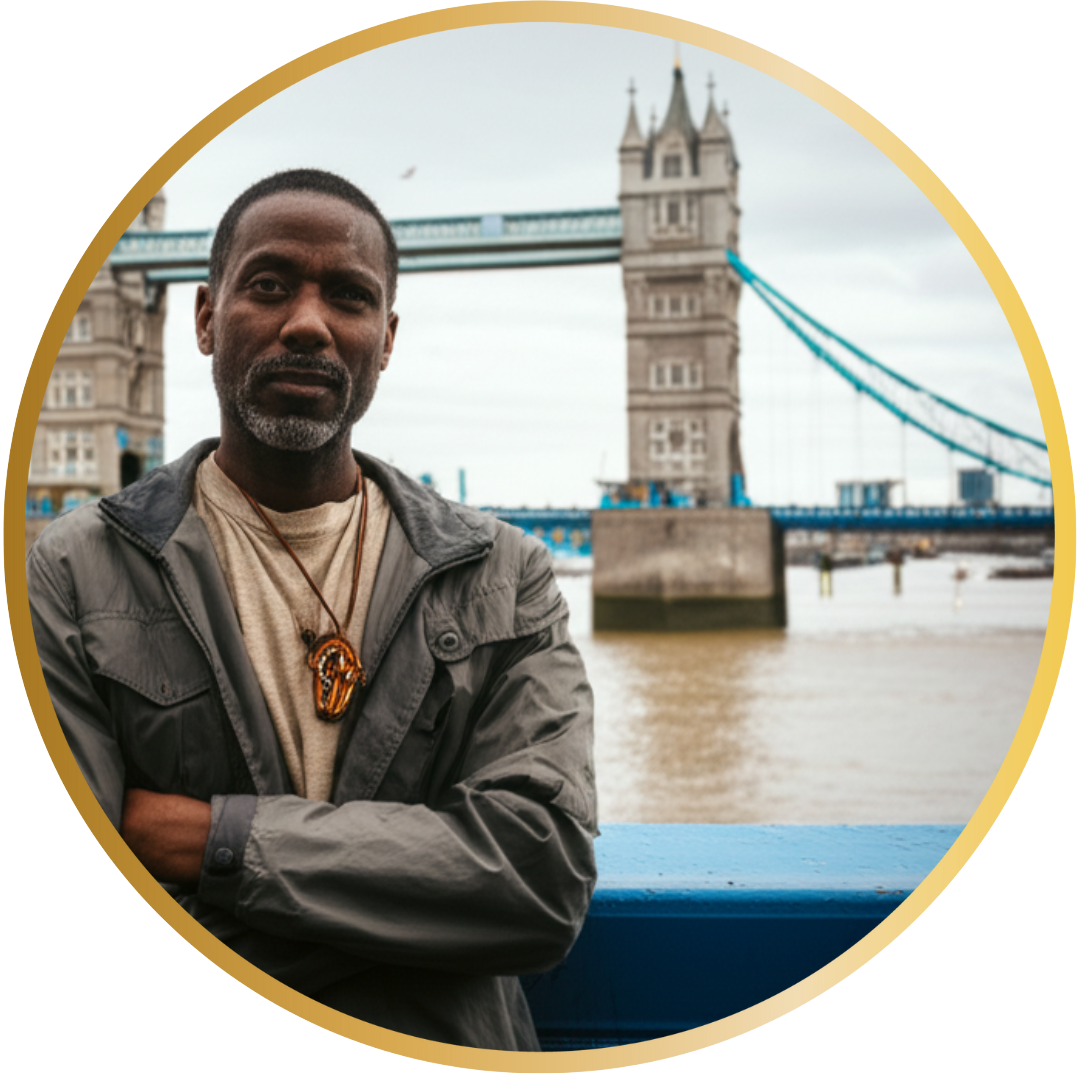
Kwame, 31, Black African (Ghanaian)
Year 0: Before the Programme (2025)
Kwame fled Ghana in 2022 after being outed by a former partner and attacked by a mob. He was tortured, witnessed his best friend murdered for being gay, and escaped with help from an underground network. He spent three years in asylum limbo—hostile environment policies, degrading Home Office interviews demanding he "prove" his homosexuality, accommodation in areas with high Ghanaian populations where he fears being recognised.
He has severe PTSD but doesn't trust therapists after a Home Office-contracted psychologist's report was used to question his asylum claim. He dissociates frequently, can't sleep, has panic attacks on public transport. He's been refused asylum twice and is on his third appeal. He's suicidal but won't seek help because he fears deportation.
An immigration solicitor refers Kwame to the London hub's specialist asylum seeker mental health service. He's terrified at first—convinced it's connected to the Home Office. The service coordinator, Samuel, is himself a refugee from Uganda who went through the same process.
Samuel explains: "Nothing you say here goes to the Home Office. No reports. No assessments. Just healing." Kwame cries for the first time since arriving in the UK. He starts attending the weekly West African LGBTQ+ support group run in Twi, French, and English.
Kwame begins seeing Dr. Adaeze Okoye, a Black queer therapist specialising in asylum seeker trauma. Dr. Okoye uses EMDR therapy for his PTSD but also incorporates traditional West African healing practices and Christian spirituality—the parts of his culture Kwame doesn't have to reject to be queer.
His asylum claim is finally granted. The hub's legal advocacy service provided a robust letter documenting his mental health journey, the inadequacy of previous assessments, and the specific risks he faces as a gay man in Ghana. He receives five years' leave to remain.
For the first time in three years, Kwame isn't suicidal. He sleeps four hours straight without nightmares.
Kwame completes an English for Speakers of Other Languages (ESOL) course and enrolls in a nursing access programme. The hub's employment support service helped him navigate the NHS recruitment process and disclosed his refugee status sensitively.
He's now a volunteer with the hub's asylum seeker peer support programme, offering one-to-one support to newly arrived LGBTQ+ refugees. He speaks five languages and provides interpretation in Twi and Ga. He co-facilitates the West African support group.
He's made his first real friend in the UK—another Ghanaian queer man who arrived last year. They cook together on Sundays.
Kwame starts his nursing training. He wants to specialise in trauma and mental health. He's moved out of temporary accommodation into a shared house with three other Black queer men, all connected through the hub. They've created chosen family—celebrating Ghanaian holidays, Nigerian Independence Day, Ugandan culture—all of them bringing their full selves.
He testifies before Parliament's Women and Equalities Committee about the mental health impact of hostile environment asylum policies. His testimony, supported by the hub's advocacy team, leads to changes in how LGBTQ+ asylum claims are assessed.
10-Year Impact (2035): Kwame is a registered mental health nurse working in an NHS refugee trauma service. He's published a paper on culturally adapted PTSD treatment for African LGBTQ+ asylum seekers. He's secured indefinite leave to remain and is applying for British citizenship.
He returns to Ghana for the first time in thirteen years to attend his mother's funeral. His chosen family in London sustains him through the grief. He sponsors two young Ghanaian LGBTQ+ people through their asylum claims.
He built a life. That's reparations—not just for what was done to him, but for all the years of survival he was owed and never received.
Journey 3: Jamal - "Healing Through Creative Practice"
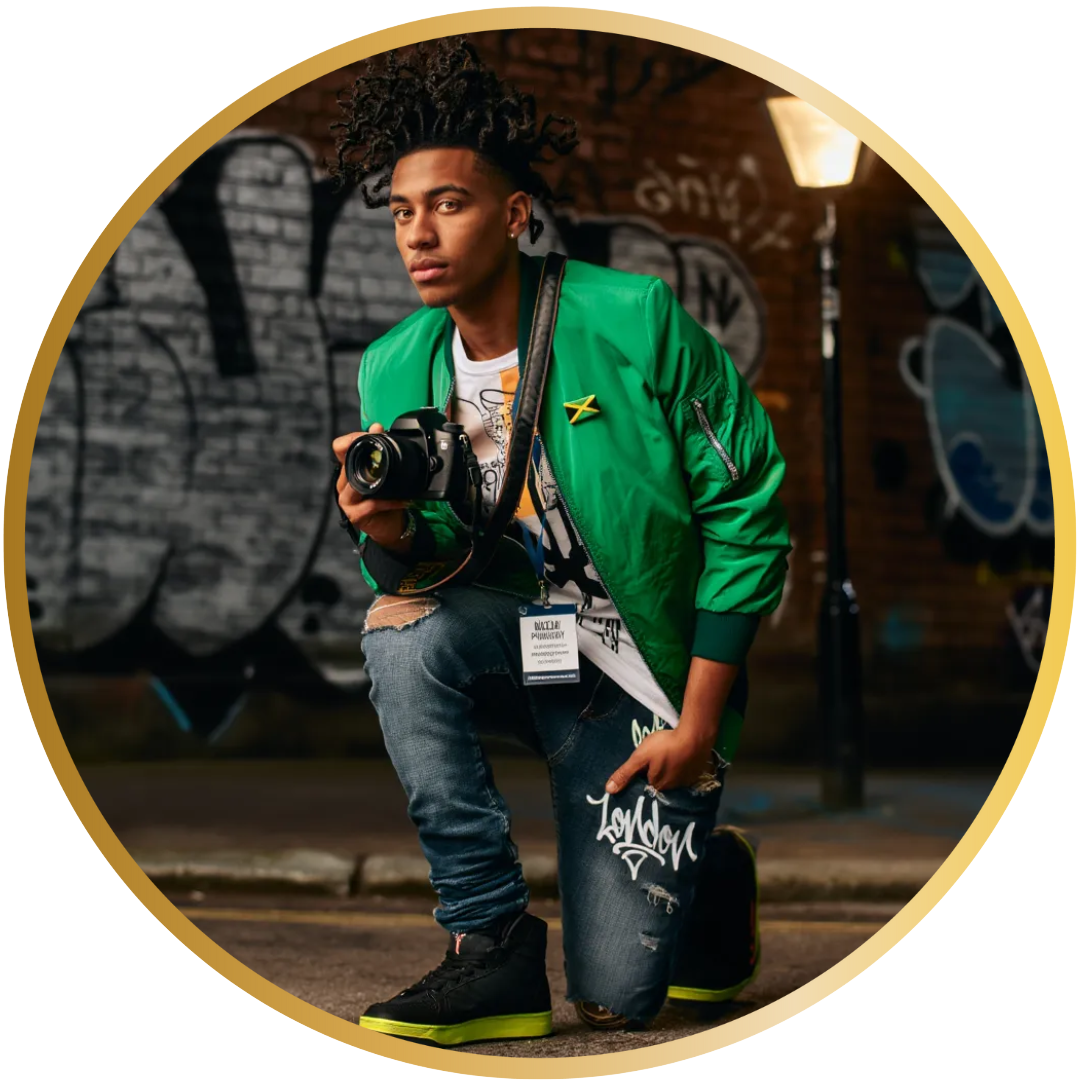
Jamal, 27, Black British (Jamaican heritage)
Year 0: Before the Programme (2025)
Jamal works as a freelance photographer documenting Black British culture. He's talented, has exhibited twice, but can barely pay rent. He came out at 22 and his devout Pentecostal family disowned him. His father said, "You're not my son anymore." He hasn't spoken to them in five years.
He's been on antidepressants for three years via his GP but never received talking therapy—just medication reviews every six months. He drinks heavily, uses cocaine recreationally, and cycles through short-term relationships that end badly. He's functional but fundamentally unwell. He's thought about suicide but never attempted. He's never processed the family trauma or the childhood sexual abuse that preceded his coming out.
Jamal sees a call for submissions to a photography exhibition at the South London hub titled "Black Queer Joy: Refusing to be Reduced to Trauma." He submits work from his ongoing project documenting Black queer London—barbershops, ballrooms, Sunday dinners, ordinary joy.
His work is selected. At the opening, he meets other Black queer artists and discovers the hub runs monthly creative practice workshops combining art-making with group therapy. He's sceptical but attends one session. They're making zines about chosen family. Jamal creates a photo essay titled "The People Who Stayed."
Through the creative workshops, Jamal starts seeing a Black queer therapist, Marcus Williams. It's the first time he's talked about the sexual abuse or his father's rejection with someone who understands both homophobia and anti-Black racism.
The therapy is hard. Jamal relapses into heavy drinking. Marcus doesn't discharge him—instead, they work on harm reduction. The hub's substance use support worker provides practical strategies without judgment. Jamal joins a weekly men's talking circle specifically for Black queer men navigating addiction.
After eight months of therapy, Jamal creates a photo series titled "Tender: Black Queer Masculinities." It documents the men from his support group—their vulnerability, their strength, their capacity for softness despite everything that tried to harden them. The series wins a British Journal of Photography award.
Jamal applies for the hub's creative practitioners programme—a year-long fellowship providing studio space, materials budget, professional development, and a living wage stipend to create work exploring Black LGBTQ+ mental health through creative practice.
He's selected alongside a poet, a dancer, a visual artist, and a musician. Together they develop "Breathe: A Black Queer Meditation on Survival," an immersive multimedia installation combining photography, movement, sound, and testimony. It tours five UK cities and is acquired by Tate Britain.
Jamal hasn't used cocaine in ten months. He's in his first relationship lasting longer than three months. He's learning what secure attachment feels like.
Jamal now runs the hub's creative practice programme, mentoring emerging Black queer artists and facilitating monthly workshops. He's secured Arts Council funding to develop a Black LGBTQ+ photography archive documenting community life across the UK.
He's also teaching a photography module at Goldsmiths titled "Counter-Visuality: Black Queer Image-Making as Resistance." He's off antidepressants, not because medication was wrong but because he's addressed the underlying trauma. He sees his therapist monthly for maintenance.
His mother contacts him. His father died. She wants to reconnect. Jamal's ready for that conversation now—grounded in chosen family and therapeutic support.
10-Year Impact (2035): Jamal is a senior lecturer in photography at University of the Arts London. His Black LGBTQ+ archive now contains 50,000 images and is housed at the Bishopsgate Institute. He's published two books of photography and curated major exhibitions at the National Portrait Gallery and V&A.
He's in a long-term relationship with a partner who knew him before he healed and witnessed his transformation. He's reconciled with his mother, attending family events with his partner. His younger cousin came out as non-binary last year and Jamal became their mentor.
His work documents not just trauma but joy, love, resistance, survival. He's teaching a generation of young Black queer artists to see themselves as more than their pain. That's reparations—transforming individual healing into cultural production that uplifts entire communities.
Journey 4: David - "Later Life Coming Out and Community Connection"
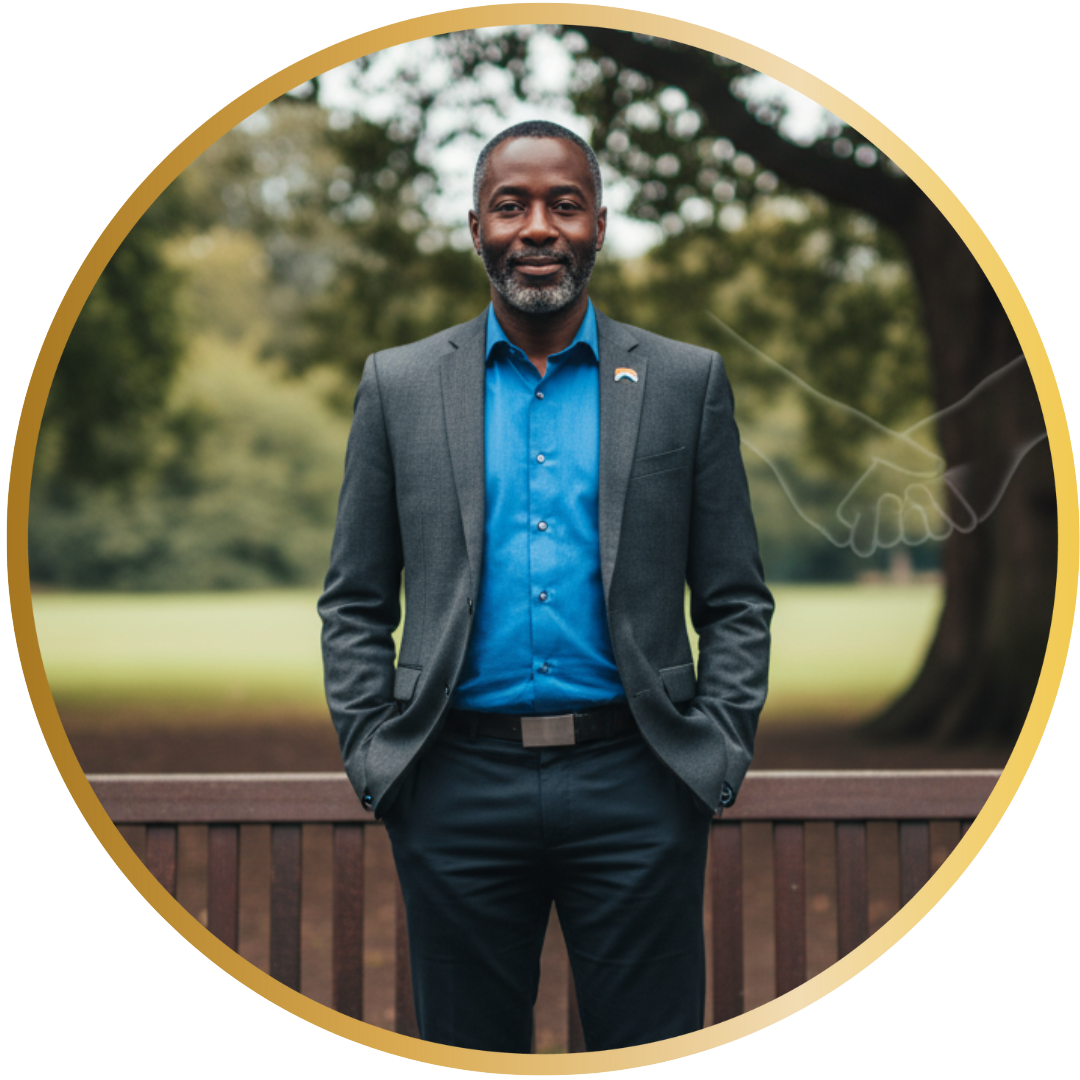
David, 52, Black British (Nigerian heritage)
Year 0: Before the Programme (2025)
David spent thirty years in a heterosexual marriage, raising two children, building a successful career, and battling depression he attributed to work stress. He knew he was attracted to men but suppressed it—grew up in a strict Nigerian Christian household where homosexuality was literally unspeakable. He thought marriage would "fix" him.
At 48, after his youngest child left for university, he had a breakdown. He came out to his wife. She was devastated but not surprised. They divorced. His children struggled but are slowly coming around. His Nigerian family disowned him. His church community rejected him. His parents will not speak to him.
Now 52, David lives alone in a flat in Manchester. He's on antidepressants and has suicidal ideation. He tried Grindr but found it alienating. He went to Canal Street bars but felt too old, too "straight-acting," too disconnected from gay culture developed in youth. He has no queer community and no roadmap for being a middle-aged Black gay man.
David's GP refers him to the Manchester hub after his second suicide risk assessment. He's reluctant—imagines groups of young queer activists he won't relate to. When he arrives, he meets the Late Bloomers group: twelve Black queer men aged 40-65 who came out later in life.
They talk about divorce, family estrangement, navigating dating apps in middle age, feeling invisible in LGBT spaces designed for youth. David cries. A 61-year-old Jamaican man named Winston says, "Welcome home, brother. We've been waiting for you."
For the first time since coming out, David doesn't feel alone.
David starts individual therapy with Dr. Chioma Nwosu, a Nigerian British queer therapist. They work on internalised homophobia, grief for the life he didn't get to live, shame about "wasting" thirty years. Dr. Nwosu helps him reframe: "You survived. That's not wasted time—that's extraordinary resilience."
He also attends family therapy sessions designed for Black families navigating late-life coming out. His eldest daughter joins him for three sessions. She says, "I just want you to be happy, Dad." It's not forgiveness but it's a start.
David's depression begins to lift. He goes on his first date with a man in four years—another member of Late Bloomers. It doesn't become romantic but they become close friends.
David retires from the civil service and immediately gets restless. The hub's older adults coordinator suggests he help develop programming for the 45+ demographic—a rapidly growing segment of Black queer community that existing LGBT services ignore.
David co-designs "Second Acts": a programme offering career transition support, retirement planning, dating workshops, and social activities for older Black LGBTQ+ adults. He facilitates the monthly book club and organises quarterly social events—theatre trips, dinners, museum visits.
He's in a relationship now with a 56-year-old Ghanaian man he met through the programme. They're taking things slow. His daughter has met his partner. His son is still processing but texted on David's birthday.
David volunteers with the hub's intergenerational mentoring programme, offering career advice and life guidance to younger Black queer men. He mentors Marcus (from Birmingham) on navigating the NHS as a Black queer professional.
He also starts a project documenting oral histories of older Black LGBTQ+ people in the North West—preserving stories that would otherwise be lost. The archive includes interviews with twelve people aged 55-83, including two who lived through Section 28.
David isn't suicidal anymore. He has community. He has purpose. He has a partner who knows his whole story and loves him anyway.
10-Year Impact (2035): David is 62 and serves on the hub's community advisory board. His oral history project has expanded nationally, now documenting 200+ stories of older Black LGBTQ+ people. The archive is housed at the Queer Britain museum.
Both his children attended his commitment ceremony with his partner last year. His son brought David's grandchildren—two grandkids who call David's partner "Grandpa Two." His parents still won't speak to him, but he's made peace with that loss.
The Second Acts programme he helped build now operates in eight cities and has supported over 300 older Black LGBTQ+ adults through late-life coming out, retirement transitions, and relationship formation. David wrote a guide titled "Never Too Late: Coming Out After 40 as a Black British Person."
He got thirty years he shouldn't have had to wait for. That's what reparations looks like—not just surviving, but getting to live fully in the time you have left.
Journey 5: Jordan - "From Service User to System Builder"
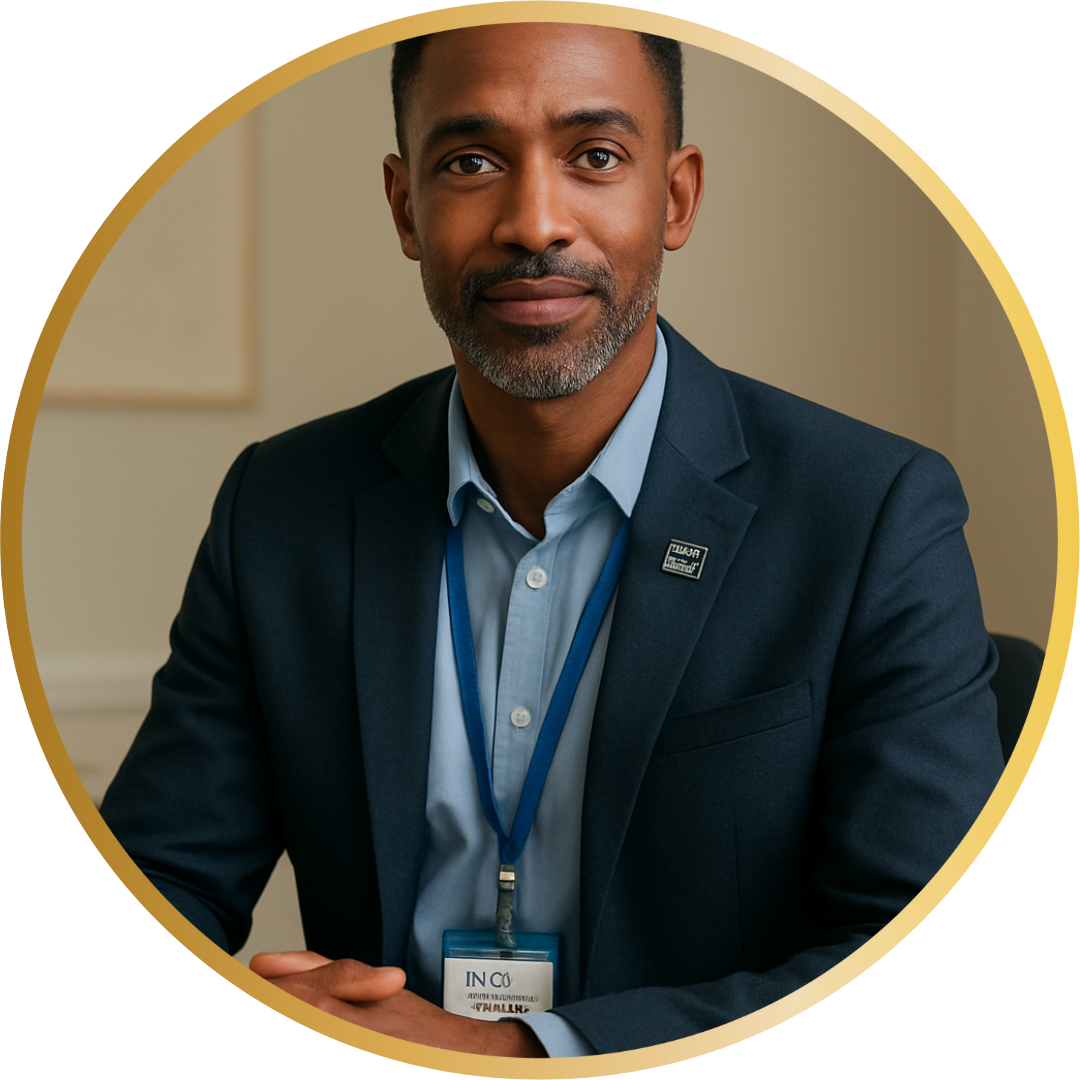
Jordan, 24, Black British (Mixed Caribbean/African heritage)
Year 0: Before the Programme (2025)
Jordan grew up in foster care after being removed from his mother at age seven due to her addiction issues. He was moved between fourteen placements—some abusive, all temporary. He came out as bisexual at 15 and experienced homophobia in several foster homes, including one where the foster father tried to "pray the gay away."
He left care at 18 with £2,000 and no support system. He sofa-surfed, stayed in hostels, dealt with housing instability whilst trying to complete his A-levels. He attempted suicide three times between 18 and 22. He was hospitalised twice, received crisis intervention, then discharged back to the same conditions that made him suicidal.
At 24, he's working part-time in retail, living in a flat share, and has deferred university twice due to mental health crises. He sees a therapist through the NHS but there's no continuity—he's on his fifth therapist in three years due to staff turnover. No one addresses the trauma of institutional care, racism, homophobia, or being care-experienced. He's just "difficult" and "complex."
Jordan is referred to the Leeds hub's specialist care-experienced LGBTQ+ programme after his fourth suicide attempt. The programme coordinator, Tara, is herself a Black care leaver. She says: "I know what it's like. And I'm still here. Let me show you how."
Jordan starts seeing Dr. Mensah, a child psychologist specialising in attachment trauma. This is the first therapist who understands that his "difficulty with relationships" is actually complex trauma from fourteen broken attachments, institutional abuse, and having no secure base. Dr. Mensah doesn't pathologise—he names the system failure.
Jordan also joins the care-experienced peer support group. Eight other Black LGBTQ+ care leavers, all navigating similar trauma. They become chosen family.
The hub's education pathway worker, Michelle, helps Jordan reapply to university with proper support provisions. She advocates for him to receive Disabled Students' Allowance for his PTSD, secures accommodation funding, and connects him with a care-experienced students' network.
Jordan starts a Psychology degree at Leeds Beckett University. It's hard—trauma doesn't disappear with support, it just becomes manageable. He has bad weeks. He attends the hub's crisis drop-in twice. But he doesn't attempt suicide. The support structure holds him.
In his second year, Jordan writes an essay titled "The Psychiatric Consequences of Institutional Care for Black LGBTQ+ Youth." His lecturer submits it to a journal. It gets published. Jordan reads his own words in print and cries.
Jordan completes his undergraduate degree and applies for the hub's peer specialist training programme. Unlike Marcus's peer support worker role, Jordan trains as a peer specialist—someone with lived experience of mental health challenges working alongside clinical staff in statutory services.
He's placed in Leeds's Early Intervention in Psychosis team, providing peer support to young people experiencing first-episode psychosis. His lived experience of hospitalisation, suicidality, and institutional trauma makes him uniquely positioned to support others. He's paid NHS Agenda for Change Band 4—£25,000 a year.
He also starts an MSc in Clinical Psychology part-time, with fees covered by the hub's education bursary programme for care-experienced students. He wants to become a clinical psychologist specialising in care-experienced young people.
Jordan presents at the British Psychological Society's annual conference on "Peer Specialists in NHS Mental Health Services: The Case for Care-Experienced Black LGBTQ+ Expertise." His presentation goes viral on academic Twitter. He's interviewed by the Guardian about his journey from service user to service provider.
He's invited to join NHS England's National Mental Health Policy Group as the care-experienced representative. At 29, he's the youngest member and the only Black queer care leaver in the room. He uses that platform to advocate for trauma-informed care, peer specialist roles, and ending the criminalisation of care-experienced young people with mental health needs.
He hasn't attempted suicide in four years. He has stable housing. He has chosen family. He's building the system he needed when he was eighteen.
10-Year Impact (2035): Jordan is 34 and a qualified clinical psychologist working in a specialist clinic for care-experienced young people. He's published fifteen papers on attachment trauma, institutional abuse, and mental health outcomes for care leavers. His research has influenced Department for Education policy on LGBTQ+ young people in care.
He's also the clinical lead for the national peer specialist training programme, which has now trained 200 care-experienced people as NHS mental health peer specialists across England. The model he helped develop in Leeds has been commissioned by forty NHS trusts.
He's in a long-term relationship and foster-caring two teenagers—both Black LGBTQ+ youth in care. He's breaking the cycle. He's giving them what he didn't get: unconditional love, stability, affirmation.
Jordan survived the system that tried to destroy him. Now he's building a different system—one where care-experienced Black LGBTQ+ young people don't just survive, they flourish. That's reparations: transforming those who were most harmed by systems into the architects of new systems designed around healing and justice.
Conclusion: Impact Beyond Individuals
Collective Impact: These five journeys demonstrate how mental health reparations transform individual lives whilst simultaneously building community infrastructure that benefits entire populations. Marcus becomes a peer support worker supporting dozens of others. Kwame's testimony changes asylum policy. Jamal's creative work shifts cultural narratives. David builds programmes for older adults. Jordan redesigns clinical services from lived experience expertise.
This is the multiplier effect of reparations: invest in one person's healing and they invest in community transformation. Over ten years, five individuals become fifty, then five hundred, then systems change that benefits thousands.
The alternative: Without intervention, Marcus might not be alive at twenty-nine. Kwame would be deported to face persecution or death. Jamal would cycle through crisis without addressing root trauma. David would die by suicide without ever experiencing queer community. Jordan would become another statistic of care leavers failed by systems.
Mental health reparations for Black queer men aren't charity. They're recognition that survival against systemic oppression requires structural support—and that when communities are resourced to heal themselves, the transformation extends far beyond the individuals directly served.